Quantum Magnetometers to measure magnetic fields with extreme sensitivity
Portable quantum magnetometers are highly sensitive instruments that can detect variations in the Earth's magnetic field with extreme precision.
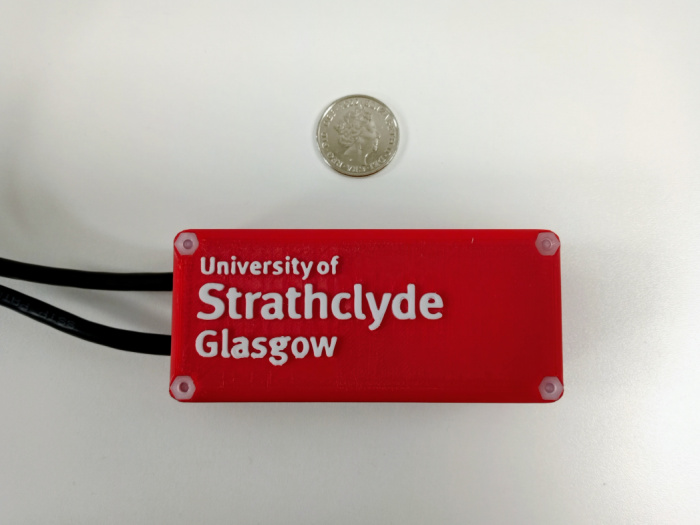
Pocket-sized quantum magnetometers, using chip-scale lasers and microfabricated atomic cells, are being used to test exciting new capabilities in navigation and distributed sensing.
Researchers at University of Strathclyde have developed compact, low-power sensor packages, capable of measuring the Earth's magnetic field with parts-per-billion precision.
One of the principal advantages of these quantum magnetometers is their outstanding accuracy. Invariable physical constants link the sensor's magnetic resonance frequency to the strength of the measured magnetic field, providing a level of measurement stability and reproducibility only presently achievable with expensive and bulky proton nuclear magnetic resonance magnetometers.
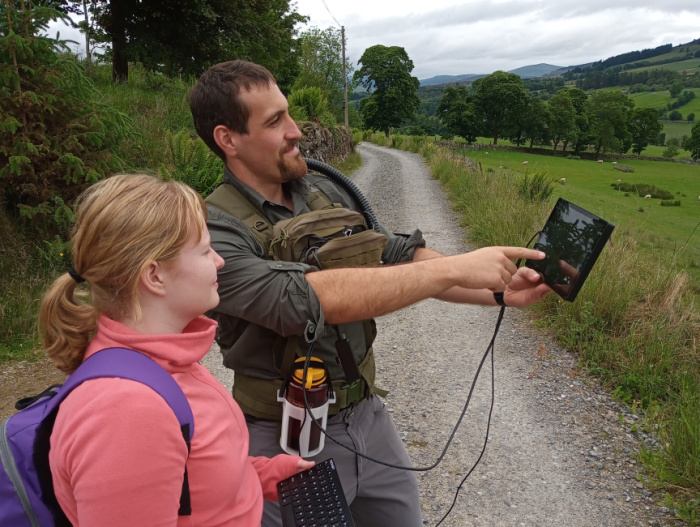
Current research looks at the measurement of invariant crustal anomalies in the Earth's magnetic field as a Global Navigation Satellite System (GNSS)-independent positioning aid for vehicles and pedestrians. The team’s field trial with a wearable quantum magnetometer demonstrated a significant positioning enhancement of a compact inertial measurement-based navigation system.
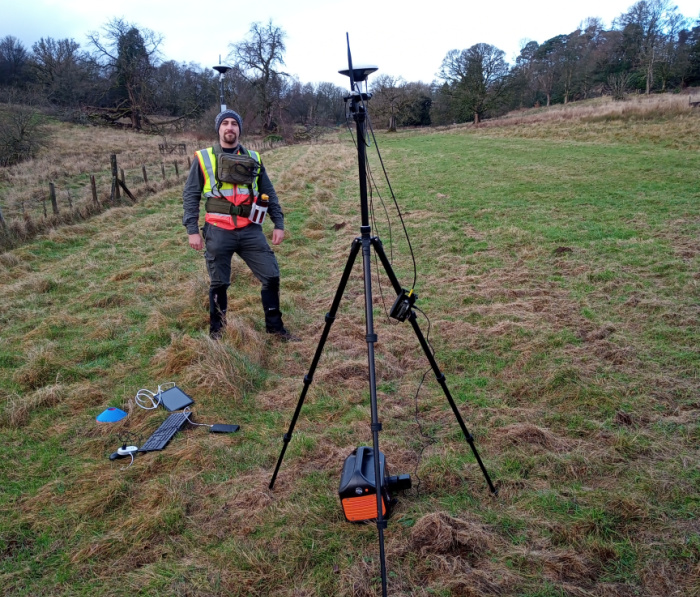
In collaboration with the British Geological Survey and RAL Space, the research team have deployed a network of quantum sensors distributed around the UK, augmenting the UK's geomagnetic monitoring network with off-grid, solar-powered networked geomagnetic sensor nodes, providing situational awareness of space weather events.
Space weather has impacts on critical national infrastructure, including power, transport and communication networks.
Key Benefits
- Quantum magnetometers are highly sensitive and achieve extreme precision and sensitivity.
- Reduces the need for expensive and heavy proton nuclear magnetic resonance magnetometers.
- Offers significant positioning enhancement and accuracy beyond traditional methods, advancing navigation in GNSS-denied environments.
Applications
The next-generation quantum magnetometers have applications in:
- Quantum navigation systems for use in aircrafts, providing accuracy for resilience independent of satellite systems.
- Improving situational awareness of space weather events and changes to the geomagnetic field, which can fluctuate with enough intensity to disrupt power grids, satellite navigation and railway signalling.
Meet our investigator
Dr. Marcin Mrozowski is a RAEng IC Research Fellow at the University of Strathclyde, where he develops and translates innovative magnetic sensing technologies into practical instruments for real-world applications.